A mirror above a sideboard or next to the dining table brings light and depth to a dining room. Whether it looks calm or restless depends on three things: the width, the height and the shape.
3 min read · Updated 8 November 2026
Why a mirror in the dining room
A mirror reflects the daylight from your windows and the light of the pendant above the table. In the evening it doubles the glow of candles. The room feels larger and deeper, without any building work.
Above a sideboard or a console, a mirror also gives the wall a focal point. The furniture becomes a place to set things down: a bowl, a lamp, a few books.
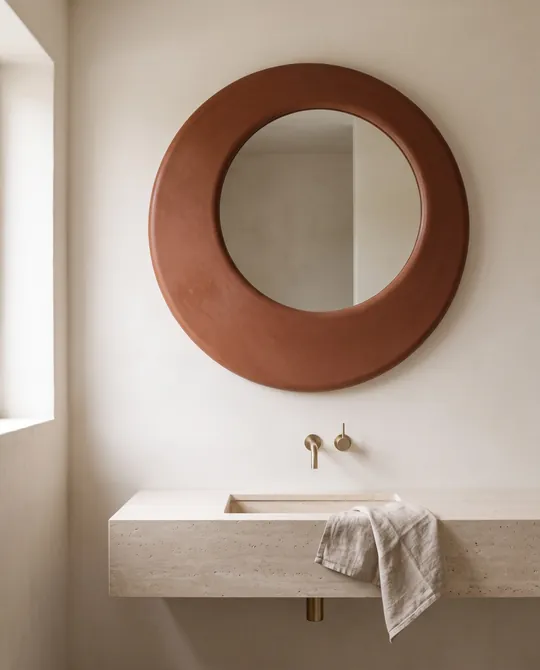
A mirror also works in any style. In a japandi or wabi-sabi interior, choose a soft, organic shape in an earth tone. In a classic town house, a round mirror with a wide frame fits. In a crisp, modern interior, the frame can be narrow and almost invisible.
How wide: narrower than the furniture
A mirror as wide as the sideboard looks heavy, a mirror that is too small disappears. A good rule of thumb: the mirror is about two thirds to three quarters of the width of the furniture below.
Sideboard width
Mirror width
120 cm
80 to 90 cm
160 cm
105 to 120 cm
200 cm
130 to 150 cm
240 cm
160 to 180 cm
Our mirrors go up to 120 x 200 cm, with every side at least 30 cm. A landscape mirror of 180 x 100 cm above a long sideboard is therefore perfectly possible. For a narrow piece of furniture, a portrait mirror often looks better than a landscape one.
How high should it hang?
Leave 15 to 25 cm between the top of the sideboard and the bottom of the mirror. Furniture and mirror then belong together, while you still have room for a vase or a lamp. Hang the mirror higher and it floats away from the furniture.
With no furniture below, the centre of the mirror sits at about eye level, around 150 to 160 cm from the floor. With a tall mirror above low furniture, mind the ceiling: leave at least as much space above as below.
Next to or behind the dining table
If the mirror hangs on the wall by the dining table, keep its bottom above the backs of your chairs, usually around 90 to 100 cm. That way no chair knocks against the frame.
Think about what the mirror reflects, too. The nicest is a mirror that shows a window, the table or the pendant. People at the table would rather not look at themselves all evening: a mirror at the end of the table, or a little higher, works better than one straight opposite a chair. For the light above the table, read How high should a pendant hang over the dining table?
Shape and frame
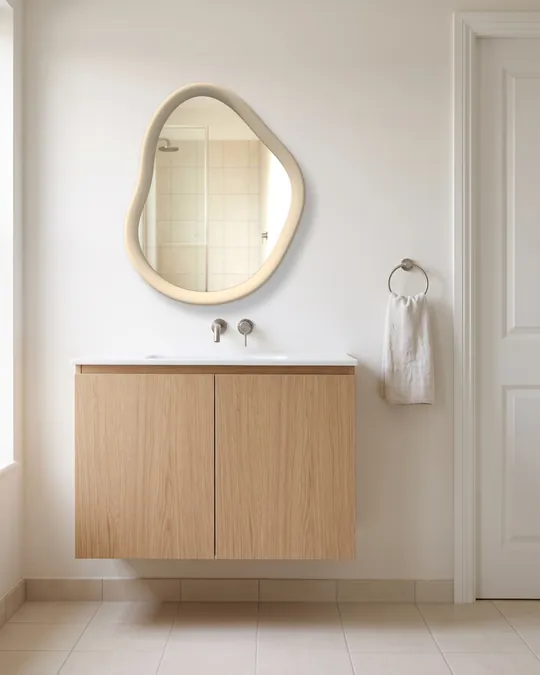
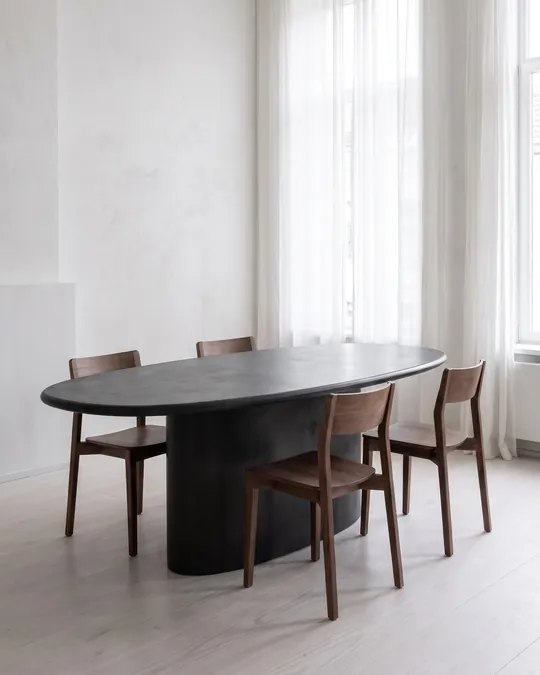
A sideboard is almost always straight. An organic mirror, like a pebble or a bean, breaks those lines and softens the whole wall. Above an oval table, a round or oval mirror works well; above an organic table, a free shape that echoes it.
At Van Clay every mirror gets a Mortex frame, narrow or wide, in one of 96 colours. Choose the colour of your table for one coherent look, or the colour of your wall for a calm, almost invisible frame. The photo shows a pebble-shaped mirror in BM23 Sand Mid above a console in an entrance hall. Shapes and prices are on organic mirrors. Where else an organic mirror shines, you can read in Where to hang an organic mirror.
A table in your shape, size and colour? After your quote, we draw it up for free.