Japandi is not a trend with lots of rules. It is a way of living in which fewer things are given more space. The dining table plays a leading role: it is where you come together every day.
3 min read · Updated 8 November 2026
What is japandi?
The name says it all: Japan and Scandinavia. Both traditions love simplicity, natural materials and things made with care. From Japan comes the calm, the empty space and an eye for imperfection. From Scandinavia come the warmth, the wood and the idea that a home should above all feel cosy.
Together they create an interior with few possessions, soft colours and materials you want to touch. Nothing shouts for attention, and yet everything feels deliberately chosen.
The table as a still point
In a japandi interior, the dining table is often the largest piece of furniture in the room. That makes its shape important. A table without sharp corners looks softer and leaves the room more open. You can walk around it more easily, and the top looks less heavy.
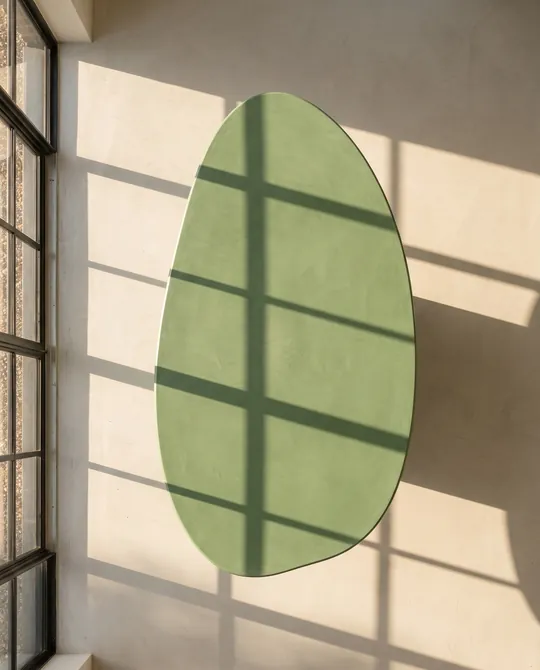
An organic shape, like a pebble from the river, suits the style best. For something calmer and more regular, a Danish oval is a lovely choice: fuller than an oval and softer than a rectangle. The difference between the ovals is explained in Danish, Finnish or Swedish oval: the difference.
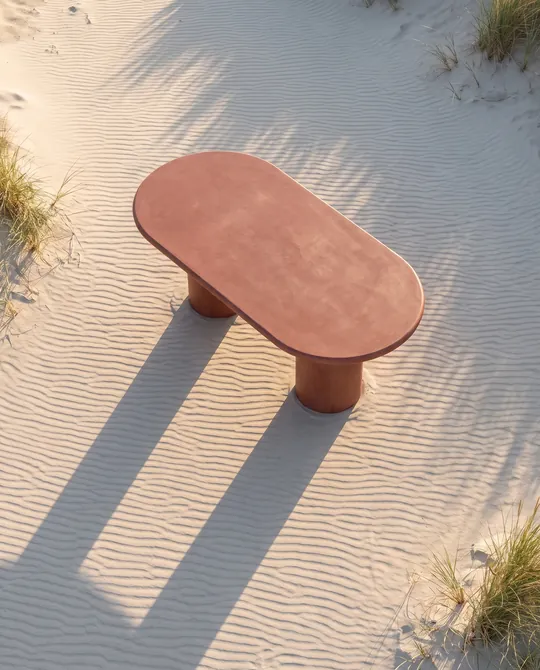
Look under the top too. A table on a single central pedestal looks calmer than one on four legs, and nobody ends up with their knees against a table leg.
Matt, mineral and made by hand
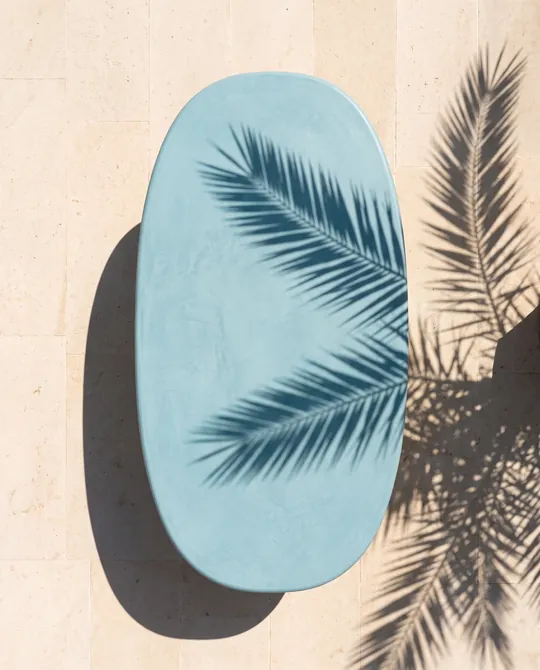
Japandi loves surfaces that absorb light rather than reflect it. Mortex fits naturally: a beton ciré that we apply by hand, seamless and matt. Subtle nuances, small specks and slight differences in texture are part of it. No two tables are exactly alike, and in this style that is precisely the point.
For the colour, anything that could come from nature works: sand, clay, stone, moss and wood. A few combinations we often see working well:
An organic dining table of 240 x 120 cm seats 7 people and has a guide price of €3,199, including VAT. A Danish oval table of 240 x 110 cm seats 6 to 8 people, for €3,199. Every colour costs the same.
To repeat the shape in your seating area, an organic coffee table in the same or a lighter shade works beautifully. That way the calm of the dining room carries through the rest of your home. After your quote, we make the technical drawing for free, so you can see the shape before we begin.
A table in your shape, size and colour? After your quote, we draw it up for free.