We make tables in Mortex, so you might think we only know one answer. Yet the honest question is not which material is best, but which material best suits the way you live. Here they are side by side.
3 min read · Updated 8 November 2026
Three materials, three characters
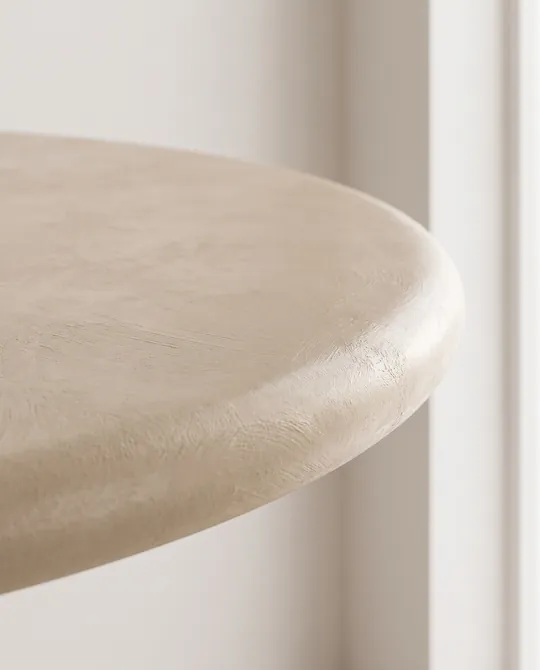
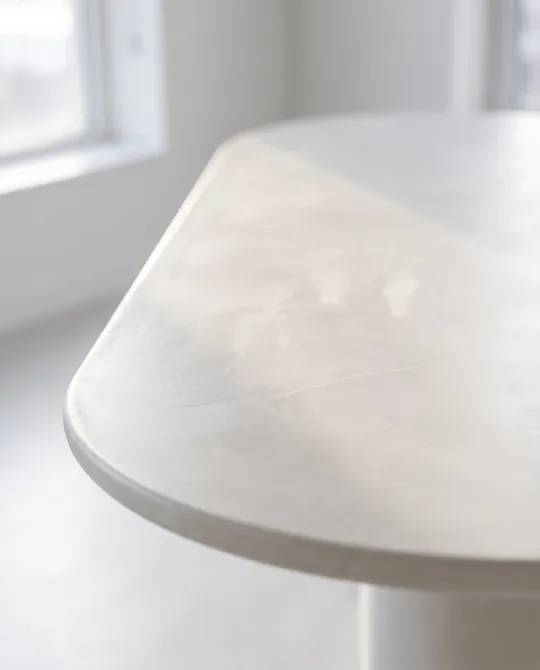
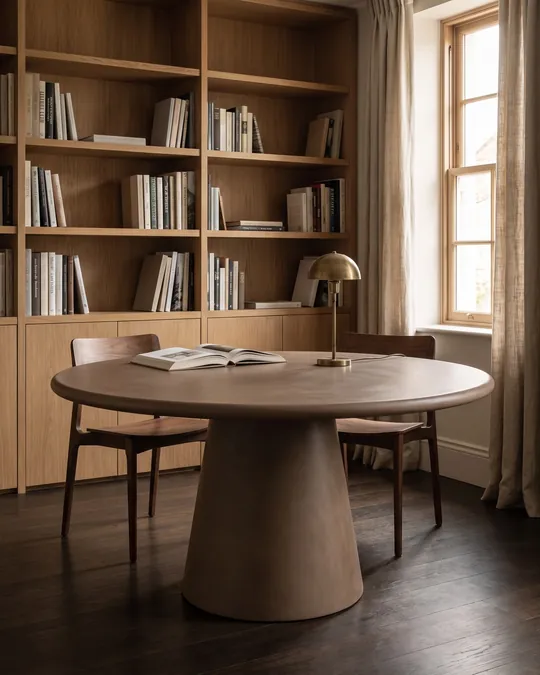
Mortex is a beton ciré by Beal, applied by hand in six layers. It gives a seamless, matt and mineral top, with subtle nuances. More in What is Mortex?
Wood is the classic table material: warm, alive, with a grain you can feel. A solid wood top darkens over the years and develops a patina.
Ceramic is a thin, very hard slab fired in a kiln. It comes in many looks, including imitations of marble or concrete, and is usually very resistant to whatever happens at the table.
Side by side
Mortex
Wood
Ceramic
Look
Matt, mineral, with nuances
Warm, natural grain
Even, often a printed pattern
Feel
Soft, velvety
Warm
Smooth and cool
Shape
Any shape, organic too, seamless
Many shapes possible
Mostly clean shapes cut from a slab
Colour
96 colours, same price
The colour of the wood or a stain
The look of the slab
Heat
Always a trivet
Preferably a trivet
Usually heat resistant
Stains
Wipe up quickly, no acids
Sensitive to water and rings
Usually not very sensitive
Scratches and knocks
Do not slide sharp objects
Dents more easily
Very hard, the edge can chip with a hard knock
This is a general comparison. Within each material there are big differences in quality and finish.
When to choose Mortex
Choose Mortex if you want a table you will not find anywhere else: in your shape, your size and your colour, with no seam between top and edge. The matt, mineral look brings calm to an interior, and no two tables are alike.
The honest counterweight: Mortex is strong, but it is not stone. Never put a hot pan directly on the top, avoid acidic or aggressive products and do not slide sharp objects across it. The pros and cons are set out in A Mortex table: pros and cons.
When to choose wood
Wood is a good choice if you love a natural grain and a table that visibly ages. Small marks are part of it and become part of the story. With a solid wood top, you can often have it sanded down after some years.
Wood is alive, though: it can move a little with the humidity in your home, a wet glass leaves a ring more easily and a hard object dents it sooner.
When to choose ceramic
Ceramic suits people who want to think about it as little as possible: a hot dish, a stain or a knife usually leaves few marks. That is why you often see it in kitchens and with families who live intensely around the table.
On the other hand, ceramic feels cooler and smoother, its look is often printed and free, organic shapes are harder to make. The thin edge of a slab can also chip with a hard knock.
The honest conclusion
If you like to cook straight onto the table, with pans fresh from the hob, and want no worries at all, ceramic is probably the calmest choice. If you love the warmth and patina of a natural material, choose wood. If you want a table with its own shape and colour, matt, seamless and unique, and you are happy to use a trivet, Mortex is for you.